1. What is RAG? A Deep Dive into Retrieval-Augmented Generation for AI

In the rapidly evolving world of artificial intelligence, a term that has gained significant attention in the last couple of years is RAG, which stands for Retrieval-Augmented Generation. This article will explore what RAG is, its benefits, and why it has become essential in today's AI landscape.
What is RAG?
RAG is an emerging technique that combines two powerful components: retrieval and generation. Specifically, it leverages the strengths of Large Language Models (LLMs) by allowing them to retrieve relevant information from a specific data source and then generate responses based on that information.
- Technical Explanation: RAG integrates the retrieval of specific data from external sources with the generative capabilities of LLMs. This approach enables LLMs to provide more accurate and contextually relevant answers by incorporating real-time data or domain-specific knowledge.
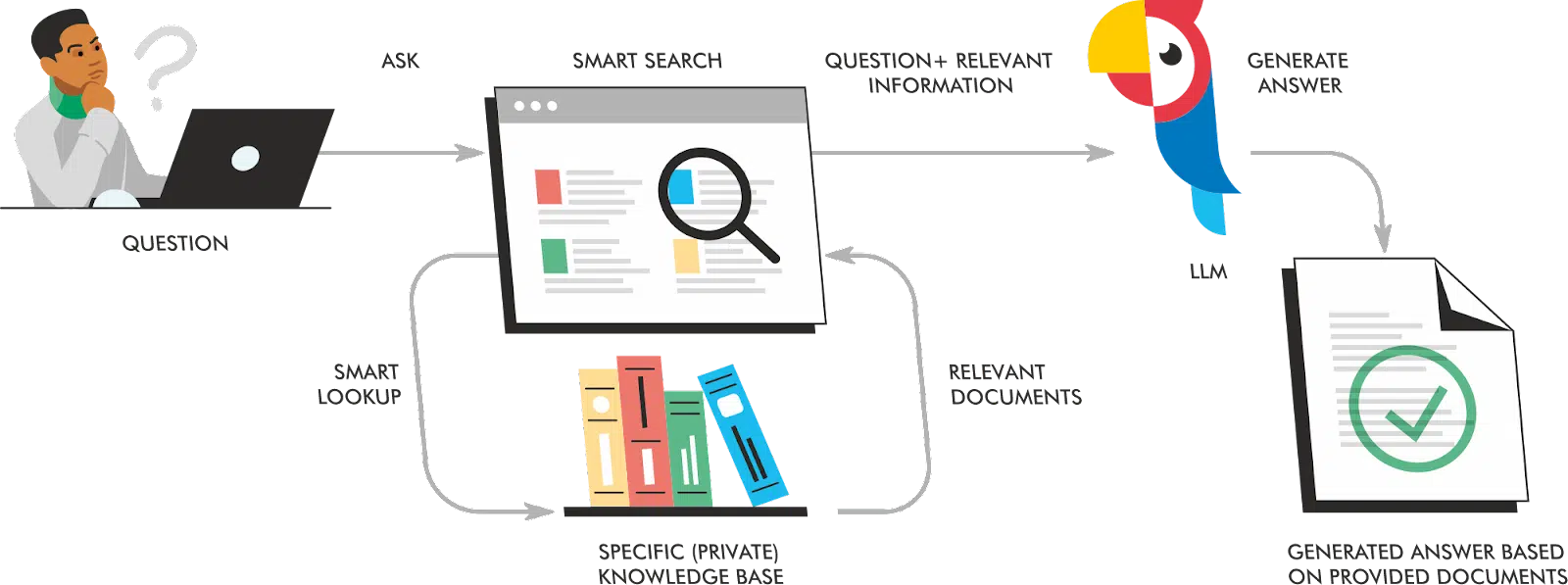
- Non-Technical Explanation: Imagine RAG as a smart assistant that not only knows how to generate responses but also has the ability to search through a vast library of information to find the most relevant details before responding.
Why Shift to RAG?
In the modern world, retrieving accurate and relevant information from vast amounts of data can be challenging. Traditional LLMs, while powerful, are limited by the data they were initially trained on and may not provide real-time or domain-specific answers.
Challenges Addressed by RAG:
Accuracy and Reliability: Traditional LLMs may offer generic responses that aren't tailored to specific needs.
Real-Time Information: LLMs trained on static data may lack access to the most up-to-date information.
Resource Efficiency: Fine-tuning LLMs to meet specific needs can be costly, time-consuming, and resource-intensive due to the complexity and large number of parameters involved.
Approaches to Overcome These Challenges
There are two primary approaches to enhancing LLMs for more specific and accurate outputs:
Fine-tuning LLMs: This involves training the model on new data, which it wasn't initially trained for. While effective, this method is resource-intensive, requiring significant computational power and time.
Retrieval-Augmented Generation (RAG): Instead of retraining the model, RAG allows the LLM to access external data sources, retrieve relevant information, and then generate a response. This method is more efficient and cost-effective, making it an attractive alternative.

Benefits of RAG
RAG offers several compelling advantages, including:
Combining the Best of Both Worlds: By integrating retrieval capabilities with generation, RAG provides responses that are both accurate and contextually enriched.
Contextual Awareness: RAG ensures that responses are relevant to the specific query by retrieving the most pertinent data.
Improved Performance: Leveraging the LLM's capabilities in tasks such as summarization, question answering, and more, RAG enhances the overall performance of AI systems.
How RAG Works: A High-Level Overview
The RAG process can be broken down into four main stages:
Query Input: The user submits a question or query.
Document Retrieval: The system retrieves relevant data based on the query from the external data source.
Response Generation: The LLM generates a response using the retrieved data.
Final Output: The system delivers the final output, customized according to the prompt and data.

Example: If a user asks, "What are the latest trends in AI?" the RAG system first retrieves the most recent articles and studies on AI trends and then uses this information to generate a detailed response.
Delving into RAG Pipelines
RAG operates through three main pipelines:
Ingestion: This is where the data is fed into the system. The data is converted into chunks, embeddings, and indexes to make retrieval efficient.
Retrieval: The system searches through the ingested data to find relevant information based on the user's query.
Synthesis: The LLM generates a response using the retrieved data, ensuring that the final output is both accurate and relevant.

Frameworks Supporting RAG
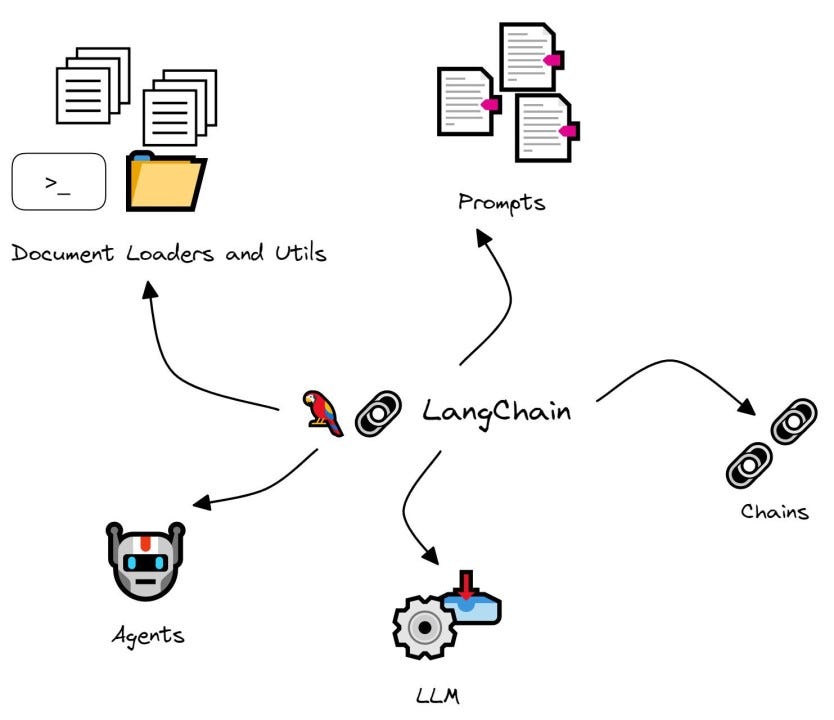
To implement RAG, various frameworks act as bridges between external data sources and LLMs. One of the most popular frameworks is LangChain. LangChain provides comprehensive documentation, examples, and code to help developers build RAG systems efficiently.
Follow the official site to know more https://www.langchain.com/
Applications of RAG
RAG is widely used across industries, with over 70-80% of projects in AI now incorporating this technique. Some common applications include:
Customer Support: Providing accurate, real-time responses by accessing customer databases.
Healthcare: Generating detailed medical advice by retrieving data from up-to-date research papers.
Finance: Offering financial insights by retrieving the latest market data.
Example: In a healthcare application, RAG could retrieve the latest clinical research to provide up-to-date treatment recommendations for a specific condition.
Conclusion
This article provided a brief overview of RAG, its benefits, and its workflow. In the next article of this series, we will dive deeper into the specifics of implementing RAG systems and explore more advanced concepts.
This article is based on the series of Irfan Malik AI Advance Course. View the complete lecture here


